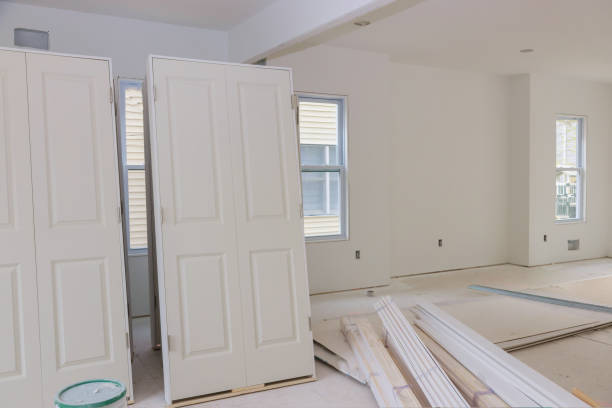
Replacing an interior door is a straightforward project that can enhance the functionality and aesthetic of your home. Whether you’re upgrading outdated fixtures or addressing wear and tear, replacing a door requires careful planning and execution. This guide will walk you through each step to ensure the process is smooth and successful.
Tools & Materials You’ll Need
Tools: – Measuring tape
– Screwdriver (manual or electric)
– Hammer
– Utility knife
– Level
– Wood chisel
Materials: – New door (pre-hung or slab, depending on your needs)
– Hinges (if not reusing old ones)
– Screws
– Sandpaper (medium and fine grit)
– Paint, stain, or finish (optional)
Step 1: Assess Your Current Door
Before removing the old door, evaluate its size, orientation, and hardware placement. This will help you determine if you need a pre-hung door (which includes both the frame and door) or just a slab door.
- Check the fit: Measure the height, width, and thickness of your existing door. Don’t forget to measure across multiple points in case of uneven surfaces.
- Inspect the frame: Ensure that the current frame is level and undamaged; otherwise, it may need repairs or replacement.
If you’re unsure about sizing or compatibility with new hardware, take photos of your existing setup to show at your local hardware store.
Step 2: Remove the Existing Door
Removing an old interior door involves careful handling to avoid damaging surrounding structures like trim or flooring.
- Unscrew hinges: Use a screwdriver to loosen screws from top to bottom. Have someone hold onto the door as you remove it from its frame to prevent sudden falls.
- Remove hardware: Detach any latches, handles, or other fixtures if they’re being reused.
- Inspect for obstructions: Look for nails or caulk on adjoining trim pieces that could interfere with installation.
Tip: Lay down protective material on floors nearby to catch screws or debris during removal.
Step 3: Prepare Your New Door
Once you’ve removed your old door, it’s time to prepare its replacement for installation.
- Trim adjustments: If needed, trim edges using sandpaper or a saw so that dimensions match those of your previous door.
- Pre-drill hinge holes: Align new hinges with their intended position on both frame sides. Mark spots accurately before drilling pilot holes.
- Attach hardware: Securely fix knobs/latches into appropriate positions following manufacturer guidelines.
Pro Tips for Seamless Installation:
- Double-check alignment frequently using levels during all steps; even small errors can affect long-term usability.
- Always use high-quality screws when attaching hinges—they’ll provide better weight support over time.
Replacing Interior Doors: Key Signs and Insights for Doors Rockville, MD
Replacing interior doors is often overlooked in home maintenance, yet it can make a significant difference in your living space. Recognizing when and why you need to replace your interior doors is essential, as it impacts not only the functionality but also the aesthetics of your home. Below, we’ll explore the reasons you might need to replace an interior door and why doing so is beneficial.
Signs It’s Time to Replace Your Interior Door
- Cracks, warping, or holes in the door surface.
- Peeling paint or veneer that compromises appearance.
- Structural damage due to moisture exposure or age.
- The door sticks or won’t close properly due to misalignment.
- The hinges creak or are loose despite repairs.
- The design no longer matches your interior decor preferences.
- Older doors may lack modern features such as soundproofing.
- Gaps around the edges of the door that allow drafts into a room, affecting energy efficiency in heated/cooled areas.
- Replacing standard doors with sliding barn doors, pocket doors, or other styles for more practicality and space optimization.
Why Replacing Interior Doors is Worth It
- Improved Aesthetics Newer doors can transform the look of a room instantly by introducing fresh designs, finishes, and colors that complement modern styles.
- Enhanced Privacy
Solid-core options provide better sound insulation between rooms compared to hollow-core models, ensuring quieter spaces. - Increased Energy Efficiency Well-fitted doors with proper seals reduce drafts and help maintain consistent indoor temperatures—potentially lowering utility bills over time.
- Boosted Property Value Updated interior features like stylish new doors can increase your home’s value when it comes time to sell.
- Better Functionality Modern door designs often include features such as better hardware compatibility or space-saving mechanisms (e.g., bi-folding designs).
Table: Comparing Old vs New Doors
| Feature | Old/Damaged Door | New/Replacement Door |
| Appearance | Worn-out finish; outdated style | Fresh look with updated aesthetic |
| Functionality | Sticking; poor alignment | Smooth operation; better fit |
| Energy Efficiency | Drafty; contributes to heat loss | Proper sealing; improved insulation |
| Soundproofing | Minimal noise reduction capability | Enhanced privacy with soundproofing |
| Maintenance Needs | Frequent repairs | Low-maintenance materials |
Key Considerations Before Replacing Your Interior Door
- Accurate Measurements: Ensure you measure the existing door frame carefully for height, width, and thickness.
- Material Selection: Choose between solid wood, hollow-core composite, MDF (medium-density fiberboard), or glass-paneled options based on needs.
- Door Style: Match your new door’s design (traditional paneled vs sleek modern) with overall room decor.
- Budget Constraints: Factor in not just the cost of the door itself but also hardware like hinges and knobs as well as labor if hiring professionals.
By recognizing signs that indicate replacement is necessary and understanding its importance for functionality, efficiency, and aesthetics in your home environment—upgrading outdated interior doors becomes a clear choice worth making thoughtfully.

Top Benefits of Choosing a Door Company in Rockville, MD for Your Home
Replacing interior doors in your home may seem like a minor upgrade, but it can deliver significant benefits. From improving the aesthetics of your space to enhancing its functionality, new interior doors can have a transformative impact. Below are some of the top reasons why replacing interior doors is a worthwhile investment.
Enhanced Aesthetic Appeal
- Update Outdated Styles: Replace old-fashioned or worn-down doors with sleek, contemporary options.
- Match Current Trends: Choose doors that complement your decor, such as barn-style sliding doors, minimalist panel designs, or glass-paneled options.
- Create a Cohesive Look: Use matching door styles and finishes throughout your house for a unified appearance.
A well-chosen door can serve as both a functional element and an eye-catching design feature in any room.
Improved Functionality
- Smooth opening and closing without sticking.
- Enhanced durability through quality materials such as solid wood or engineered composites.
- Reduced noise transfer between rooms due to improved insulation features.
These functional upgrades improve daily convenience and comfort within your living space.
Increased Energy Efficiency
| Feature | Benefit |
| Insulated Core Designs | Helps maintain consistent room temperatures. |
| Tight Seals | Reduces drafts and improves heating/cooling efficiency. |
| Sustainable Materials | Eco-friendly options like engineered wood lower environmental impact. |
By replacing older doors with energy-efficient models, you can also lower utility bills over time.
Enhanced Privacy and Noise Reduction
Modern interior doors often offer better soundproofing qualities compared to older ones. This makes them ideal for creating private spaces like home offices or bedrooms that require minimal noise intrusion. Consider solid-core options if privacy is a priority.
Benefits include: – Quieter environments in bedrooms or study areas. – Reduced household noise disruptions when entertaining guests.
Increased Property Value
- Adds a sense of freshness and care to the home’s condition.
- Aligns with modern design preferences sought after by buyers.
- Reflects attention to detail that enhances overall market appeal.
Tailored Personalization
- Add frosted glass panels for natural light while maintaining privacy.
- Choose from various finishes (painted, stained) that coordinate with wall colors and furniture pieces.
By investing in fresh interior door replacements tailored specifically for your space, you enjoy both practical improvements and visual enhancements tailored entirely around you!
Essential Tips for Door Repair Rockville, MD: Measuring and Purchasing the Perfect New Door
Accurate measurements and careful selection are critical for ensuring your new interior door fits seamlessly into your space. Below is a detailed guide on how to measure, choose, and purchase the ideal door for your home.
Tools You’ll Need
Before beginning, gather the following tools:
– Tape measure
– Notebook or paper for recording dimensions
– Pencil or marker
– Ladder (if measuring tall frames)
Measuring Your Door Space
- Measure the Width:
Use a tape measure to determine the width of the doorway at three different points – top, middle, and bottom. Record the smallest measurement, as this will account for any irregularities in the frame. - Measure the Height:
Measure from the floor to the top of the doorway on both sides. Again, record multiple measurements and use the shortest one. - Check Door Thickness:
Measure the thickness of your current door (if present) or check that of the frame. Standard interior doors are typically 1 3/8 inches thick, but verify this before purchasing. - Note Hardware Placement:
If you’re replacing an existing door, take note of hinge placement as well as where doorknob holes exist to match these with your new door.
| Dimensions to Record | Measurements to Take |
| Width | Top, middle, bottom |
| Height | Left side, right side |
| Thickness | Door or frame |
| Hardware Placement | Hinges & doorknob |
Choosing Your New Door
- Material Options: Doors come in various materials such as wood (solid or hollow core), MDF (medium-density fiberboard), glass-paneled designs, or composite materials.
- Style Compatibility: Choose a design that complements your home’s interior aesthetic—classic panel doors suit traditional homes while flush or minimalist styles work well in modern interiors.
- Pre-hung doors come attached to their own frame with hinges already installed, making them easier for beginners.
- Slab doors consist only of a single panel without hardware or a frame but are more cost-effective if you’re just replacing an old panel in an existing frame.
- Customization Options: Many manufacturers offer options like pre-drilled holes for hardware installation or trim-ready finishes tailored to your needs.
Purchasing Tips
- Check if it includes installation guides or templates if you’re planning DIY installation.
- Confirm return policies with retailers in case of measurement errors.
- Look out for warranties—especially on higher-end materials like solid wood or specialty glass-paneled designs.
- If purchasing multiple doors at once (e.g., updating an entire floor), ask about bulk discounts from suppliers.
Final Thoughts on Door Selection
Taking precise measurements and considering style preferences ensures success when buying a new interior door for any space in your home. Investing time upfront not only prevents costly errors but also helps streamline installation later on while enhancing both functionality and visual appeal throughout your living spaces.
Choosing the Right Door Type and Style to Match Your Aesthetic
Selecting the right door type and style for your interior space is a critical step in maintaining both functionality and design harmony throughout your home. The type of door you choose has a significant impact on its usability, while the style affects how well it blends with your existing décor. Below is a guide to help you make an informed decision.
Types of Interior Doors
- Panel Doors
These are classic choices that suit a variety of styles, from traditional to contemporary. They come with raised or recessed panels, creating depth and visual interest. - Flush Doors
Smooth and minimalist, flush doors work well in modern or minimalist interiors due to their clean lines and no-frills design. - Barn Doors
Sliding barn doors are ideal for creating a rustic or industrial vibe. They are also space-saving, making them great for smaller rooms where swing clearance is limited. - French Doors
Featuring glass panes, French doors are perfect for dividing spaces while still allowing light to flow between rooms. They add an elegant touch to any home. - Pocket Doors
These slide into the wall cavity, saving space while providing versatility in areas like bathrooms or closets where conventional doors might be cumbersome.
Factors to Consider When Choosing Door Styles
- For modern homes, opt for clean lines and simple designs like flush or panel doors with minimal detail.
- Traditional homes often benefit from more ornate panel doors or French doors.
- Solid wood adds warmth but tends to be pricier.
- Engineered wood (e.g., MDF) is budget-friendly and versatile.
- Glass elements can bring light into darker spaces but may require more upkeep.
- Neutral colors (white, beige, gray) complement most interiors.
- Bold hues can create an accent point but should align with other design elements.
- Consider staining or painting wooden doors based on surrounding furniture tones.
- Hardware Compatibility:
Ensure that hinges, knobs, locks, or handles match both the style of the door and other metal finishes in the room (e.g., brass vs chrome).
Matching Functionality with Aesthetic Preferences
| Requirement | Suggested Door Type | Example Scenarios |
| Space Optimization | Pocket/Barn Doors | Small apartments or tight spaces like bathrooms |
| Sound Insulation | Solid-Core Panel Doors | Bedrooms/offices requiring quiet environments |
| Light Passage | French/Glass Panel Doors | Rooms lacking natural light |
| Budget Restrictions | Hollow-Core Panel/Flush Doors | Entry-level options for budget-conscious projects |
Practical Tips for Coordinating Door Styles Across Rooms
- For consistency across multiple rooms, stick to one overarching style (e.g., picking either all flush doors or all panel doors). However, minor variations like paint color can differentiate spaces subtly.
- Avoid mixing too many finishes in one area—cohesion creates visual balance within open-concept layouts.
By carefully considering both function and form when choosing interior door types and styles, you’ll ensure that every door not only looks great but also serves its intended purpose effectively within your space.

Removing the Old Door: Step-by-Step Instructions for a Smooth Start
Successfully replacing an interior door starts with properly removing the existing one. Taking the time to remove the old door carefully will ensure that no damage is done to the frame or surrounding areas, setting you up for a smooth installation process. Below is a step-by-step guide to help you accomplish this task efficiently and safely.
Tools You’ll Need
- Flathead screwdriver
- Phillips head screwdriver
- Utility knife
- Hammer or mallet
- Pry bar (optional)
- Power drill (if screws are tightly secured)
- Tape measure (optional)
Step 1: Open and Stabilize the Door
- Begin by opening the door fully so it swings freely in its hinges.
- Use a wedge, doorstop, or another stabilizing object at the bottom of the door to prevent it from moving as you work.
Step 2: Remove Hinge Pins (If Applicable)
For doors with removable hinge pins: 1. Place a flathead screwdriver underneath each hinge pin. 2. Lightly tap the base of the screwdriver with a hammer or mallet to loosen each pin. 3. Once loose, pull out each pin carefully and set them aside in a safe place.
For non-removable hinges: 1. Unscrew each hinge plate from both the door and frame using an appropriate screwdriver or drill bit. 2. Keep screws organized—consider placing them in a labeled container for reuse later.
Step 3: Detach Door From Frame
After removing hinge pins or screws: 1. Grip both sides of the door firmly. 2. Lift it upward gently until it clears any remaining hardware, such as hinges or latch plates. 3. If resistance occurs due to paint buildup around hinges, use a utility knife to carefully score around these areas before lifting again.
Step 4: Inspect and Prepare Frame (Optional)
Once you’ve removed the old door: 1. Inspect your door frame for signs of damage, warping, or old paint accumulation that could interfere with installing your new door. 2. Use sandpaper to smooth rough edges on wood frames or fill gaps with wood filler if necessary. 3. Double-check measurements against your new door’s dimensions—adjustments may be required if there’s significant size variation.
| Issue | Solution |
| Paint buildup on hinges | Score edges with utility knife before lifting |
| Warped frame | Replace sections or plane down uneven areas |
| Gaps in frame | Use wood filler for minor corrections |
Pro Tips for Removing Old Doors
- Label components: If you’re reusing hardware like hinges or screws, labeling them can save time during reinstallation.
- Avoid force: Never yank on stuck doors as this could damage both the frame and drywall around it; always work patiently using proper tools like pry bars when necessary.
- Protect flooring: Use blankets or cardboard beneath removed doors to avoid scratches while working nearby.
By following these steps meticulously and preparing thoroughly, you’ll set yourself up for success in installing your new interior door without unnecessary delays or complications.
Perfecting Door Installation in Rockville, MD: Aligning, Testing, and Achieving Functionality
Installing a new interior door may seem straightforward, but ensuring it hangs correctly is critical for functionality and appearance. A poorly aligned door can lead to issues like sticking, uneven gaps, or difficulty opening and closing. Below is a thorough guide to help you align, test, and adjust your new door for optimal performance.
Step 1: Align the Door in the Frame
Proper alignment begins by positioning the door within its frame before securing it. Follow these tips:
– Check hinge placement: Ensure hinges are attached correctly to both the door and frame. Misaligned hinges are one of the most common causes of poor fitting. – Pre-fit the door: Temporarily place the door in the frame without screws to ensure it fits snugly without forcing or leaving excessive gaps. – Adjust shims if necessary: Use wooden shims to keep an even gap between the door edges and frame (typically 1/8 inch on all sides). This prevents sticking or unnecessary rubbing.
Step 2: Secure Hinges Properly
Hinge installation directly impacts how well your door swings and rests within its frame. Consider these steps when attaching hinges: – Attach each hinge one at a time using screws that fit securely into pre-drilled pilot holes. – Tighten screws evenly across all hinges to prevent tension imbalances or misalignment. – Test by swinging the door open after installing each hinge—this ensures adjustments can be made incrementally if needed.
| Hinge Size | Recommended Screw Length | Door Type Compatibility |
| Standard | 3/4”–1” | Hollow-core doors |
| Heavy-Duty | >1” | Solid-core doors |
Step 3: Check Alignment Gaps
Once hinges are installed: – Look for consistent gaps (referred to as reveals) between the edges of your newly hung door and its frame. Uneven spacing indicates misalignment that needs correction. – If adjustments are required, loosen hinge screws slightly, reposition as necessary, then retighten.
Common Reference Gap Standards:
| Door Edge | Ideal Gap Size |
| Top | 1/8 inch |
| Hinge Side | Consistent with hinge depth |
| Strike Side | ~1/8–3/16 inch |
Step 4: Install or Adjust Latch Hardware
With alignment complete: 1. Attach latch plates securely to their designated positions on both the edge of your new door (for latch mortise) and strike plate location on framing components . 2 . Confirm hole match alignment matches testing closure mechanisms ensure secure lock fitment-in-door-frame .
()+
Hanging the New Door: Aligning, Testing, and Perfecting Its Functionality
Once your old door has been removed and the new one is prepped with hardware, the next critical step is hanging it properly. Proper alignment and testing during installation ensure that your door functions smoothly and lasts for years. Follow these steps to achieve a seamless installation.
Aligning the Door in the Frame
- Start by attaching one hinge at a time.
- Align the hinge plates on both the door and frame so they fit precisely over each other. Ensure all screws are tight to prevent sagging later on.
- There should be an even gap (about 1/8 inch) along both sides of the door when it’s closed within the frame.
- Use shims if needed to adjust gaps or correct unevenness in older frames.
- Using a level, confirm that both vertical and horizontal edges of your door are square with the surrounding frame. This step prevents future issues like uneven swinging or improper latching.
Testing Door Functionality
- Swing Test: Open and close your door several times to ensure that it swings smoothly without resistance or scraping against any part of the frame or floor.
- Latch Alignment: Verify that the latch aligns perfectly with its corresponding hole in the strike plate on the frame.
- Clearances: Double-check clearances along all edges again after mounting hinges fully; small adjustments may still be necessary.
Fine-Tuning Your Installation
- If you notice squeaking during operation, apply a small amount of lubricant (such as WD-40) to hinge pins.
- When dealing with sticky areas where wood meets wood, lightly sand rough spots before repainting or staining for a smoother finish.
- In cases where closing takes extra force due to friction between surfaces—especially common in humid environments—adjust screw tension slightly until performance improves.
Common Issues & Troubleshooting Tips
| Problem | Possible Cause | Solution |
| Door doesn’t close properly | Misaligned hinges | Loosen screws slightly; realign hinges |
| Excessive clearance | Frame not level | Add shims under problem area |
| Latch doesn’t line up | Strike plate misplaced | Adjust strike plate position |
Taking time early in this process ensures fewer complications down-the-line while preserving aesthetics as well functionality simultaneously.
- Comprehensive Guide to Door Installation in Rockville, MD: Step-by-Step Instructions
- Step-by-Step Guide to Door Replacement Rockville, MD: How to Replace an Interior Door
- A Comprehensive Guide to Door Replacement Rockville, MD: Step-by-Step Instructions
- Factors to Consider for Door Installation in Rockville, MD and Costs
- Comprehensive Guide to Door Installation Rockville, MD: Repair and Replacement Tips
- Efficient Tips for Door Installation Rockville, MD Residents Can Rely On